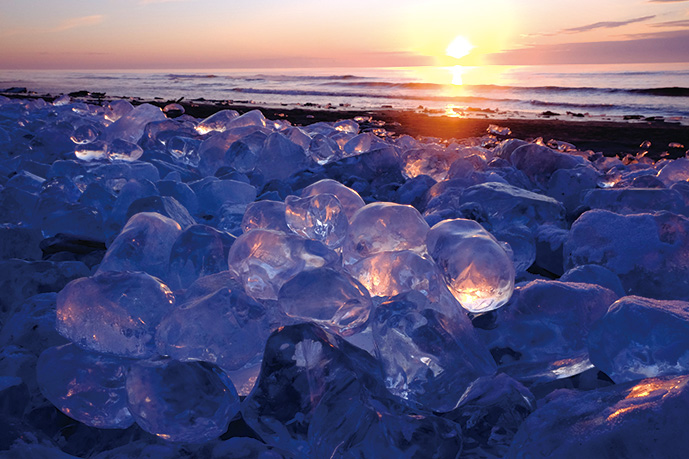
Have you heard of Jewelry Ice?
Jewelry ice is created when ice floes from the Tokachi River break apart at the river’s mouth and wash up onto the beach.
The sand polishes each block to a gem-like shine.
Ice is shining like diamonds in the sun.
The best time is early morning!
The best time is early morning.
The ice is shining like diamonds with the sunrise.
If you are lucky, you will see a “steam fog”.
It is a mysterious scenery.
By the way, the ice shows many faces throughout the day.
(Day time is a little warm. )
Warm yourself up!!!
Minimum temperature in this season : -15℃
You make sure to wear cold weather gear.
There is a rest house near the beach. You can take warm drinks and food.
1. Thermal underwear : You have to have thermals. You wear thermals in layers.
2. Jacket : You have to wear a heavy coat.
3. Shoes : You wear many layer of Socks and winter boots.
4. Items : A wool beanie, a scarf, gloves, instant heat pads ( You can buy them at drugstore or home improvement store. )
Take pictures
Mobile phones and cameras may go down because of the cold, so you have to keep them warm and use outside in a short time.
How to get there
1. Drive a rental car.
2. Take a jewelry ice sightseeing bus or taxi.
*Group tour
Access
Toyokoro city (Jewelry Ice) – Obihiro city (Obihiro Station)
40 min by car
*How to get Obihiro city : Access